Blog

Issue #220 May 1 2018 Volume 45-3

More than a half century after the publication of Rodolfo Stavenhagen’s landmark essay “7 Erroneous Thesis about Latin America”, its critique of dominant development thinking remains sharp, as was shown at a colloquium hosted by El Colegio de México 50 years to the day after the publication of  the original text. TABLE OF CONTENTS | PURCHASE THIS ISSUE
2021-09-02T17:23:06+00:00

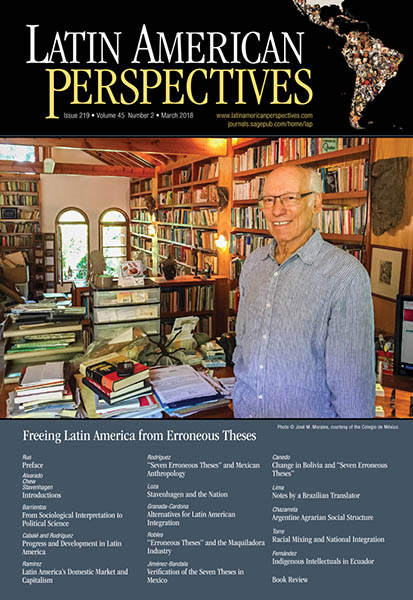
Issue #219 Mar. 1 2018 Volume 45-2

More than a half century after the publication of Rodolfo Stavenhagen’s landmark essay “7 Erroneous Thesis about Latin America”, its critique of dominant development thinking remains sharp, as was shown at a colloquium hosted by El Colegio de México 50 years to the day after the publication of  the original text. TABLE OF CONTENTS | PURCHASE THIS ISSUE

2021-09-02T17:36:05+00:00

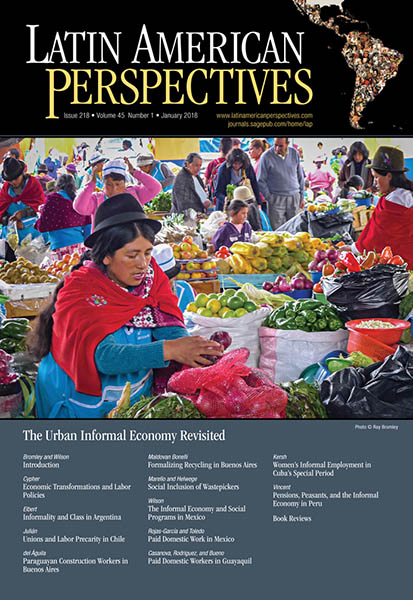
Issue #218 Jan. 1 2018 Volume 45-1

The distinction between “formal” and “informal” jobs and enterprises was first introduced in the 1970s and has been very widely used ever since. TABLE OF CONTENTS | PURCHASE THIS ISSUE
2021-09-02T17:33:09+00:00

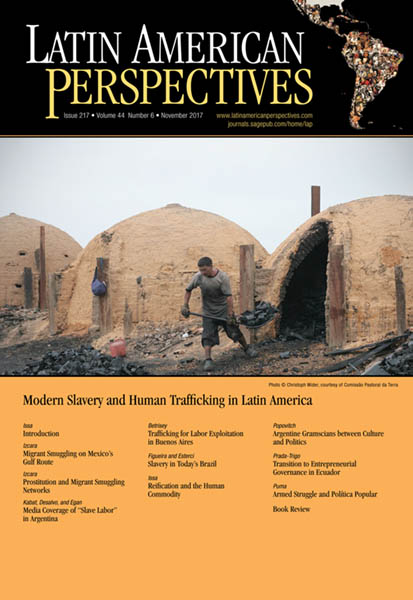
Issue #217 Nov. 1 2017 Volume 44-6

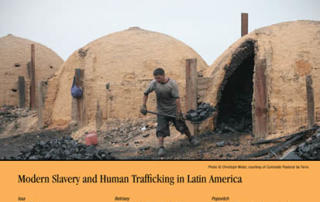
Modern slavery and human trafficking affect an estimated 1.8 million people in Latin America and the Caribbean today yet remain significantly understudied given their devastating human consequences. TABLE OF CONTENTS | PURCHASE THIS ISSUE
2021-09-02T17:26:24+00:00

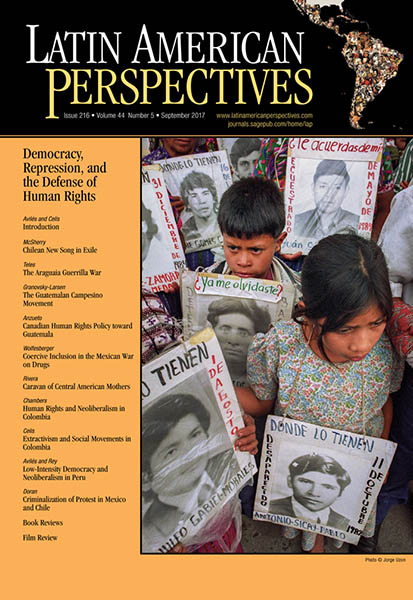
Issue #216 Sept. 1 2017 Volume 44-5

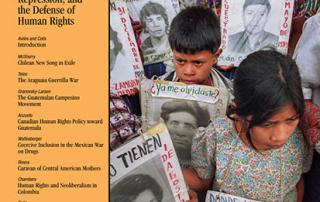
In the 1990s Barry Gills, Joel Rocamora, and Richard Wilson directly challenged the democratic-transitions literature by introducing the model of “low-intensity democracy” a largely procedural democracy that allows political opposition, greater individual freedoms, a reduced institutional role for the armed forces, and a more permeable environment for the investments of transnational capital. TABLE OF CONTENTS | PURCHASE THIS ISSUE
2021-09-02T17:51:31+00:00

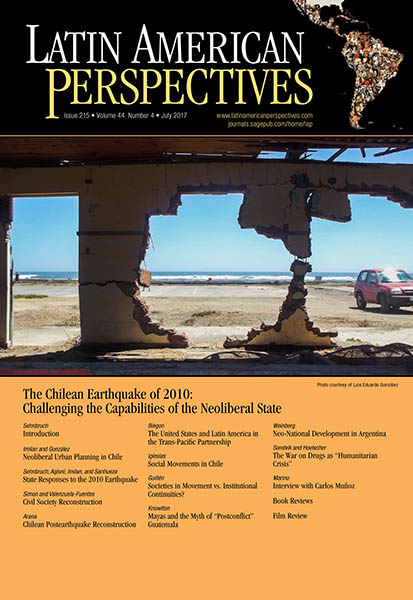
Issue #215 July 1 2017 Volume 44-4

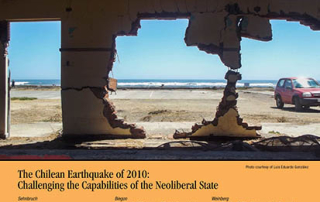
On February 27th 2010, southern Chile was hit by an 8.8 magnitude earthquake followed by several devastating tsunamis. The disaster cost 575 lives and economic losses equivalent to 18% of Chile’s GDP. TABLE OF CONTENTS | PURCHASE THIS ISSUE
2021-09-02T17:45:25+00:00

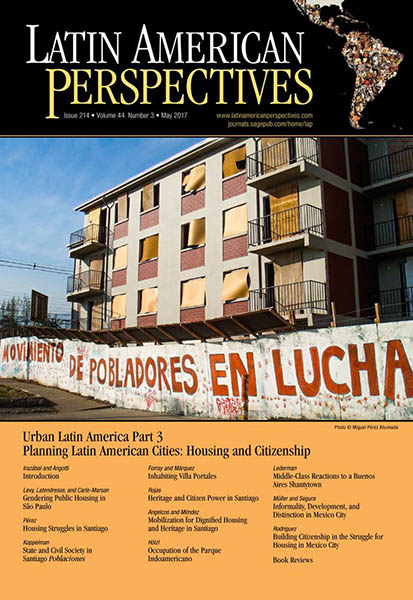
Issue #214 May 2017 Volume 44-3

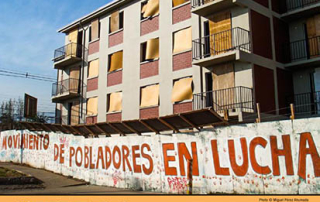
Urban social movements have contested the conditions under which people live and work in Latin America’s cities. The movements arose in response to the urban and housing policies of the neoliberal state, reflect deep contradictions of class, gender, poverty and informality, and signal the emergence of new forms of citizenship. TABLE OF CONTENTS | PURCHASE THIS ISSUE
2021-09-02T17:41:25+00:00
Go to Top