Issue #218 Jan. 1 2018 Volume 45-1
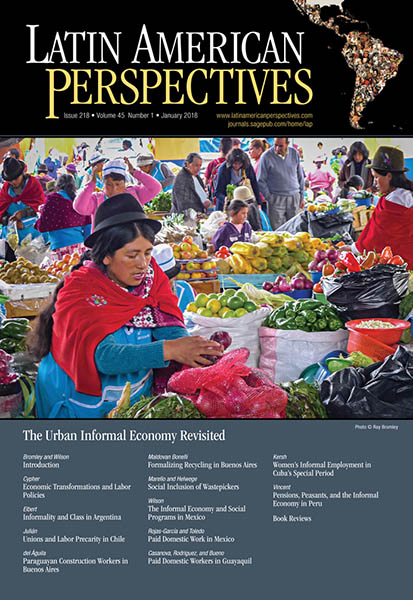
The distinction between “formal” and “informal” jobs and enterprises was first introduced in the 1970s and has been very widely used ever since. TABLE OF CONTENTS | PURCHASE THIS ISSUE

The distinction between “formal” and “informal” jobs and enterprises was first introduced in the 1970s and has been very widely used ever since. TABLE OF CONTENTS | PURCHASE THIS ISSUE
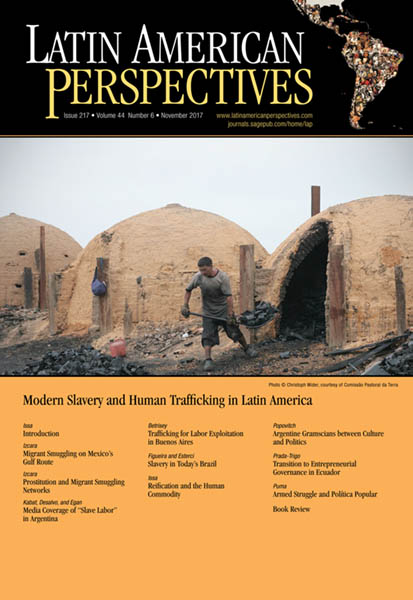
Modern slavery and human trafficking affect an estimated 1.8 million people in Latin America and the Caribbean today yet remain significantly understudied given their devastating human consequences. TABLE OF CONTENTS | PURCHASE THIS ISSUE
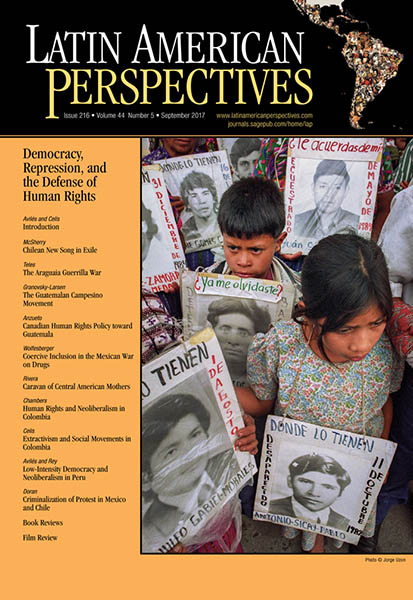
In the 1990s Barry Gills, Joel Rocamora, and Richard Wilson directly challenged the democratic-transitions literature by introducing the model of “low-intensity democracy” a largely procedural democracy that allows political opposition, greater individual freedoms, a reduced institutional role for the armed forces, and a more permeable environment for the investments of transnational capital. TABLE OF CONTENTS | PURCHASE THIS ISSUE
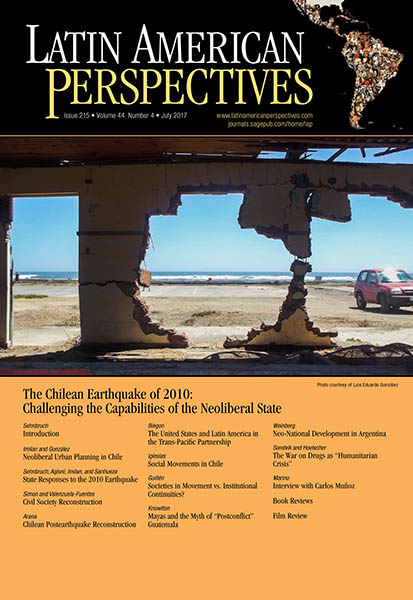
On February 27th 2010, southern Chile was hit by an 8.8 magnitude earthquake followed by several devastating tsunamis. The disaster cost 575 lives and economic losses equivalent to 18% of Chile’s GDP. TABLE OF CONTENTS | PURCHASE THIS ISSUE
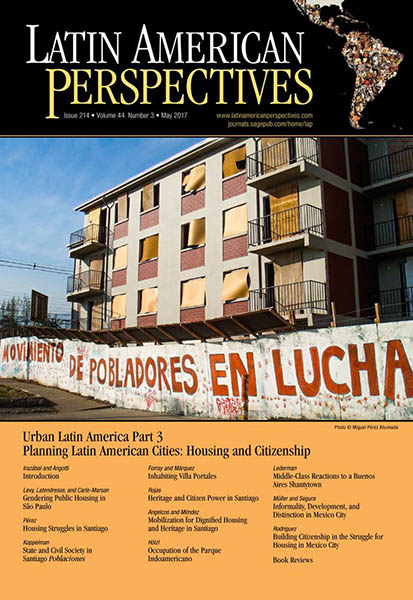
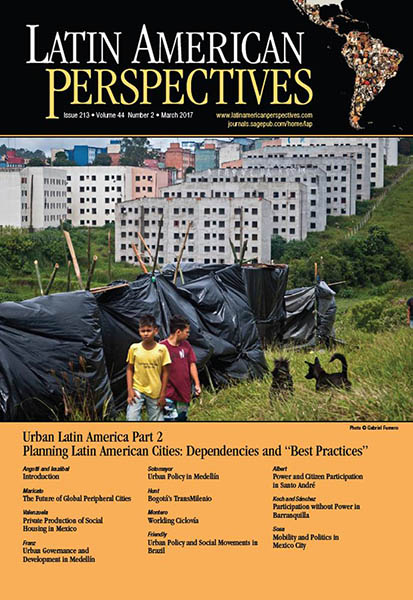
Urban social movements have contested the conditions under which people live and work in Latin America’s cities. The movements arose in response to the urban and housing policies of the neoliberal state, reflect deep contradictions of class, gender, poverty and informality, and signal the emergence of new forms of citizenship. TABLE OF CONTENTS | PURCHASE THIS ISSUE
Urban Latin America: Part 2: Planning Latin American Cities: Dependencies and “Best Practices” TABLE OF CONTENTS | PURCHASE THIS ISSUE
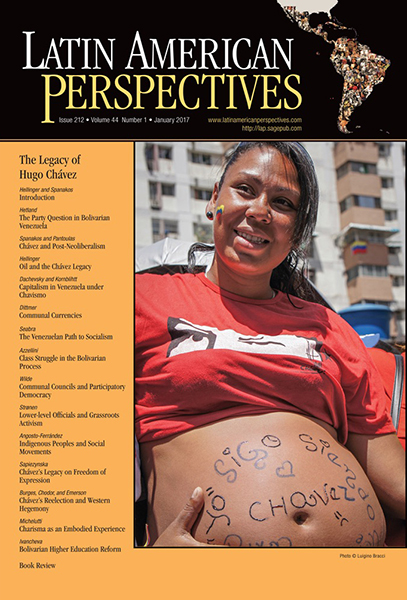
“The Legacy of Hugo Chávez ” TABLE OF CONTENTS | PURCHASE THIS ISSUE
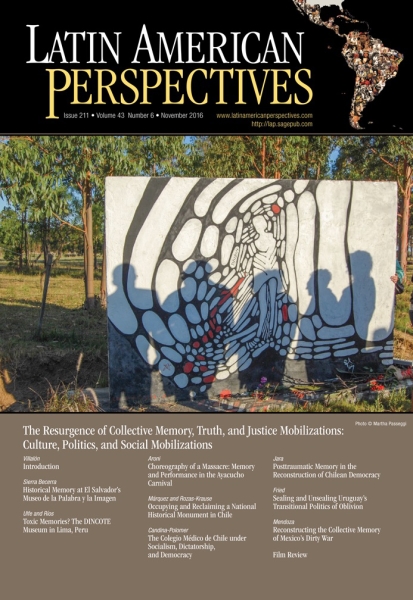
“The Resurgence of Collective Memory, Truth” TABLE OF CONTENTS | PURCHASE THIS ISSUE
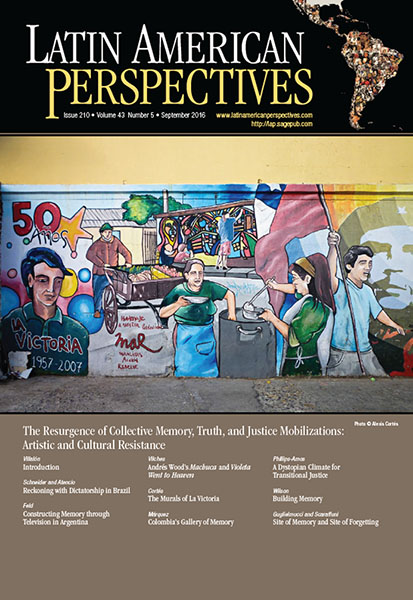
“The Resurgence of Collective Memory, Truth, and Justice Mobilizations: Artistic and Cultural Resistance" ” TABLE OF CONTENTS | PURCHASE THIS ISSUE
Pedagogical Documentaries and Praxis By: Kristi M. Wilson and Tomás Crowder-Taraborrelli (full story - click here) Alejandro Ramírez Anderson Tierralismo: Stories from a Cooperative Farm, 2013. José Cohen H2Omx, 2013. En este valle verdusco, antes corrían ríos rutilantes, cenizos, castaños y cárdenos, púrpuras, perdidos y pardos; quebrajosos, vocingleros, berreando bajaban de la mon-taña humeante, salían a los llanos lerdos, tentaban a la temprana Tenochtitlán. Hoy van mugiendo entubados, menguados, pesados de aguas negras, crecidos de mierda; ríos sin riberas, risibles, con riendas, rabiosos, rabones, ruidosos de coches; avanzando a tumbos por la ciudad desflorada, desembocando en los lagos letales, y en el marcado mar, que ya no los ama. —Homero Aridjis Part of the rich documentary film tradition includes pedagogical films. The best of these documentaries successfully incorporate the strange combination of artistic and pedagogical innovation in their efforts to educate and encourage audiences to bring about social change. In the past decade, a new type of documentary about sustainability has made itself a prominent feature of sites like YouTube, Vimeo, and Facebook. These documentaries vary in quality and length, from feature-length films about activists who oppose the depletion of natural resources to instructional videos about how to build an [...]