
Uncategorized

Modern Slavery and Human Trafficking in Latin America

Modern Slavery and Human Trafficking in Latin America Issue #: 217  | Volume #: 44 |  Number #: 6 Date: November 2017 Interviewer: Alexander Scott Interviewees: Daniela Issa Short Description: Modern slavery and human trafficking affect an estimated 1.8 million people in Latin America and the Caribbean today yet remain significantly understudied given their devastating human consequences. This issue addresses this gap in the slavery and trafficking scholarship by taking a critical look at it across the region and situating it within the transnational capitalist economy. Articles include theoretical analyses of the phenomenon as well as recruitment practices, populations susceptible to being enslaved/trafficking, and the role of violence. Additionally, it seeks to provide regional balance in the literature on slavery and trafficking in Latin America, which has disproportionately centered on Brazil; it highlights three underresearched areas—slavery outside Brazil, nonsexual slavery, and smugglers/traffickers rather than victims exclusively. LATIN AMERICAN PERSPECTIVES is a theoretical and scholarly journal for discussion and debate on the political economy of capitalism, imperialism, and socialism in the Americas. For more than forty years, it has published timely, progressive analyses of the social forces shaping contemporary Latin America. http://latinamericanperspectives.com
Migration, Regional Traditions, and the Intricacy of Documentary Representation in Cuates de Australia and La chica del sur

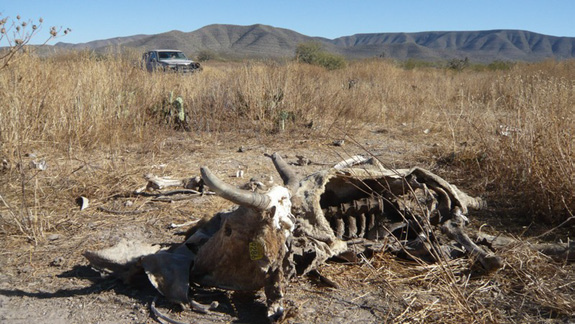
Review by: Tomás Crowder-Taraborrelli Approaches to telling a story are, of course, abundant. Latin American filmmakers borrow from all kinds of artistic traditions—literature, pop music, the plastic arts, home movies, etc. What makes this borrowing both draining and stimulating is that the web offers an excess of examples to draw from. Further, digital production and online distribution are cultivating a new kinship among filmmakers, visual traditions, and viewers across the world. This is a daunting realization that the current crop of young filmmakers is trying to grapple with. Two recent documentary films from Mexico and Argentina bring the topic of social and cultural migration into focus, giving international audiences the opportunity to enter otherwise inaccessible worlds. Cuates de Australia (Drought) from Mexico and La chica del sur (The Girl from the South) from Argentina display contrasting approaches to portraying the hardships of relocation. Both documentaries follow their protagonists’ journeys from the place they call home to an unfamiliar land and their bittersweet return. Cuates de Australia, directed by Everardo González, is an enigmatic film. It goes out of its way to remain removed from its subject, but it cannot help but become enamored of its own rendition of it. This essential [...]

Go to Top